Kids Playing Hide and Seek Vector: A Designer's Review
As a designer who spends more time staring at stitch simulations than actual sunsets, I am always cautious when approaching new design assets. There is a distinct difference between a graphic that looks charming on a screen and one that translates beautifully into thread. When I first opened the Kids Playing Hide and Seek Vector package, my initial reaction was one of nostalgic warmth. The black and white aesthetic immediately suggests versatility, stripping away the distraction of color to focus on line weight, composition, and negative space. For those of us running a craft business or managing an Etsy seller storefront, this kind of clarity is gold. It allows us to impose our own brand identity through thread choices rather than being locked into a pre-determined palette.
First Impressions and Visual Personality
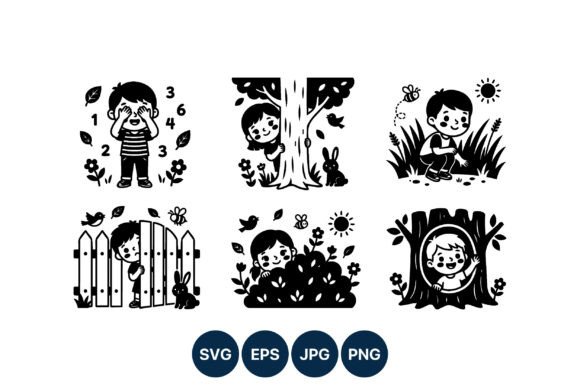
The mood of this collection is undeniably playful yet grounded. The illustrations depict children interacting with nature—hiding behind grass, peeking at flowers, and engaging with small animals under a smiling sun. From a technical standpoint, the lines appear clean and deliberate. In the world of Illustrations and Graphics, "clean" often means "ready for digitizing," but since this is a vector set intended for various uses, I evaluated it with the eye of someone who needs to convert these shapes into a viable machine embroidery design. The lack of intricate shading in the source files is a massive advantage. It means less guesswork when deciding between a satin stitch for outlines and a fill stitch for larger areas like the grass or the children's clothing.
The visual personality here is whimsical without being childish in a cheap way. This distinction is crucial for boutique branding. You want a handmade product to feel premium, even if the subject matter is playful. The Kids Playing Hide and Seek Vector strikes this balance well. The characters have enough detail to be recognizable but are simple enough to remain legible when scaled down for a pocket logo or scaled up for a back-panel design.
Real-World Application: The Custom Tote Scenario
To truly test the viability of these files, I mentally walked through a recent client request: a set of custom tote bags for a local daycare's spring fundraiser. The client wanted something that felt organic and community-focused. This is where the Kids Playing Hide and Seek Vector shines. Imagine stitching these designs onto natural canvas tote bag design projects. Using earthy thread colors—sage greens, mustard yellows, and soft browns—the black and white vectors would transform into a cohesive, nature-inspired series.
For a project like this, the "hide and seek" theme offers a narrative. One bag could feature a child hiding behind a large flower, another showing a child discovering a rabbit. This storytelling element increases the perceived value of the finished product. Customers aren't just buying a bag; they are buying a scene. If I were to use these for custom apparel, such as a sibling set of sweatshirts, the simplicity of the vector allows the texture of the fleece to complement the stitching rather than competing with it. A heavy sweatshirt embroidery job requires designs that don't get lost in the nap of the fabric, and the bold lines of this set seem up to the task.
Navigating Fabric and Hoop Constraints
However, enthusiasm must be tempered with technical reality. Not every surface is created equal. While the Kids Playing Hide and Seek Vector is robust, there are scenarios where caution is required. If you are planning to apply this to a curved surface like a cap, you must consider the hoop size limitations. The interaction between the children and the surrounding nature elements might span a width that exceeds a standard cap frame. In such cases, you may need to isolate specific elements—perhaps just the child or the sun—to make the embroidery project feasible.
Furthermore, fabric texture plays a pivotal role. On thin, stretchy fabrics like baby onesies, a dense design can cause puckering. Since the source files are vectors, the responsibility falls on the digitizer (or you, if you are doing the conversion) to manage stitch density. If you are using a pre-digitized embroidery file derived from these vectors, always test on scrap fabric first. Pay close attention to the small details, like the petals of the flowers or the ears of the animals. On dark fabrics, ensure your underlay is sufficient to prevent the background material from showing through the lighter thread colors. A poor contrast choice here can ruin the crispness that makes these Illustrations so appealing.
Commercial Viability and Brand Consistency
For small shop product creators, consistency is key to building trust. The Kids Playing Hide and Seek Vector offers a unified style that can serve as a cornerstone for a seasonal collection. Whether you are creating holiday embroidery for summer camps or designing nursery decor pillows, the aesthetic remains consistent. This helps in creating recognizable printable mockup previews for your online store. When a customer sees a coherent look across your Etsy listings, it signals professionalism.
It is also worth considering the licensing implications before diving into commercial embroidery. While the download includes a ZIP folder with SVGs, indicating flexibility for digital and physical goods, you must confirm the specific license terms regarding resale. Can you sell the stitched item? Can you sell the digitized file? These are questions that protect your craft business from legal headaches. Assuming the license permits commercial use of finished items, the potential for high-margin products like personalized gifts is significant. A pillow cover featuring these children playing in the grass makes for an exceptional baby shower gift, combining sentimental value with high-quality craftsmanship.
Final Verdict for the Working Designer
In conclusion, the Kids Playing Hide and Seek Vector is a strong contender for any designer's library. Its strength lies in its adaptability. It works equally well as a standalone embroidered patch or as part of a larger all-over print concept. The black and white format is a strategic asset, giving you full control over the final color story. However, success depends on execution. Do not skip the step of checking thread color contrast against your chosen fabric. Do not assume the default settings will work on every material. Test your stabilizer choices rigorously, especially if you are working with knits or textured weaves.
If you take the time to respect the nuances of the medium, these graphics can elevate your baby embroidery lines, add charm to your kitchen towel collections, and bring a sense of joy to your personalized gift offerings. It is a design that invites creativity, provided you approach it with the technical discipline it deserves. For the maker who values both aesthetic appeal and practical application, this vector set is a worthwhile investment.