Review: Black and White Flower Bouquets Line Art
As a designer who spends more time staring at stitch simulations than most people care to admit, I approach new Illustrations with a specific set of questions. Will this translate well from a screen to fabric? Does the line weight hold up under tension? When I first opened the folder for Black and White Flower Bouquets Line Art, my immediate reaction was one of relief. In a market saturated with overly complex, dense files that eat up thread and test patience, this collection offers a refreshing return to clarity.
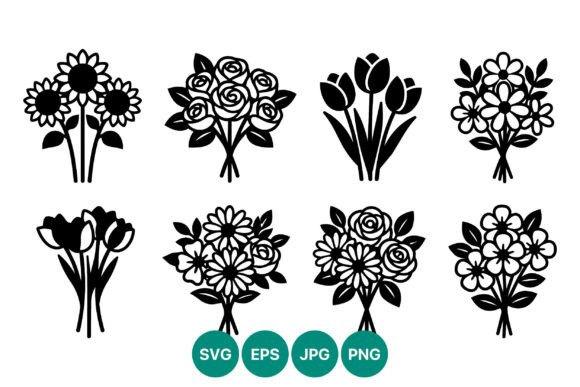
The package includes eight distinct bouquets featuring roses, tulips, sunflowers, and daisies, all rendered in a clean vector illustration style. While the download provides SVG, PNG, JPG, and E files, my focus here is strictly on how these Graphics function as a potential machine embroidery design or a template for digitizing. If you are an Etsy seller or a small shop owner looking to expand your design assets, understanding the practical application of these lines is crucial before you commit to a production run.
The Aesthetic: Minimalism Meets Botanical Charm
The mood created by Black and White Flower Bouquets Line Art is undeniably modern farmhouse meets boutique chic. The lack of color in the source art is not a limitation; it is a strategic advantage. It forces the eye to focus on the silhouette and the flow of the stems. For an embroiderer, this means you have total control over the final palette. You aren't fighting against pre-determined shading; you are building the dimension yourself through thread choice.
Visually, the layouts feel balanced. The bouquets aren't cramped, which suggests they will breathe well when stitched out. Whether you are aiming for a single satin stitch outline or a delicate running stitch sketch, the underlying structure of these flowers supports various techniques. This versatility makes them ideal for custom apparel where the garment color might change from order to order. A sunflower looks just as striking in golden yellow thread on navy blue as it does in white thread on black canvas.
Real-World Application: The Tote Bag Test
To truly evaluate these designs, I imagined a specific real-life scenario: preparing a custom order for a local florist who needed branded tote bag design options for her shop. She wanted something elegant but durable enough for weekly market use. I selected the rose and daisy bouquets from the Black and White Flower Bouquets Line Art set as the basis for the project.
Because the source files are vector-based Illustrations, scaling them to fit a standard 5x7 hoop was seamless. The clean lines meant that if I were digitizing this myself, the pathing would be straightforward. For those using pre-digitized versions, the simplicity suggests a lower stitch density, which is excellent for tote bags made of cotton canvas. Heavy fill stitches can make bags stiff and uncomfortable to carry, but a line-art approach keeps the fabric supple. The resulting finished product would feel high-end and intentional, rather than like a bulky patch slapped onto a bag.
This same logic applies to sweatshirt embroidery. A large, dense floral design on a hoodie chest can weigh the garment down and cause puckering over time. These bouquets, with their airy composition, sit lightly on fleece or French terry. They offer that popular "hand-drawn" look that customers love without compromising the comfort of the handmade product.
Navigating Fabric Textures and Challenges
While the design is strong, no embroidery file is universal. There are specific scenarios where you need to exercise caution with Black and White Flower Bouquets Line Art. First, consider the fabric texture. On highly textured materials like waffle weave or thick terrycloth, very fine lines can get lost or break up. The delicate petals of the tulips might disappear into the loops of a towel unless you adjust your stitch length or use a heavier thread weight.
Stretchy fabrics present another challenge. If you are applying these designs to baby clothes or athletic wear, the stability of the line work is paramount. A long, continuous line across a stretch zone can pop if the fabric expands too much during wear. In these cases, breaking up the design into smaller segments or using a cut-away stabilizer is non-negotiable. Similarly, curved surfaces like caps require careful positioning. The center of a bouquet might work well on the front panel, but the extending leaves could wrap awkwardly around the curve if the hoop size isn't managed correctly.
Dark fabrics also require a shift in strategy. Since the source art is black and white, you must ensure your thread colors provide enough contrast. A dark grey thread on a black sweatshirt will render the beautiful details invisible. Always test your color choices against the garment before committing to the full run.
Commercial Viability and Brand Consistency
For craft business owners, consistency is key to building trust. Using Black and White Flower Bouquets Line Art across different products—from aprons to pillow covers—creates a cohesive brand identity. The uniform style of the eight bouquets allows you to offer variety without looking disjointed. A customer might buy a tea towel with sunflowers today and return next month for a pillow cover with daisies, recognizing immediately that both items belong to your specific collection.
Furthermore, these designs excel in creating printable mockup previews for your online store. Because the lines are crisp, they photograph beautifully, allowing potential buyers to visualize the personalized gift clearly. This visual clarity directly impacts buyer engagement and can reduce hesitation at checkout.
Designer Notes for Success
Before you launch your next embroidery project using these assets, keep these practical tips in mind:
- Test on Scrap: Always stitch a sample on the exact fabric you plan to use. What looks good on muslin might behave differently on linen.
- Check Licensing: The download includes various file formats, but always confirm the license terms regarding commercial use before selling finished items or digital products derived from these Graphics.
- Stabilizer Selection: Match your stabilizer to the fabric weight. Lightweight fabrics need more support to prevent the fine lines from distorting.
- Detail Inspection: Zoom in on the smallest leaves and petal tips. If a detail seems too tiny for your machine's capability, simplify it before stitching to avoid thread breaks.
- Contrast Check: Create black and white mockups of your intended thread colors against the garment to ensure readability.
In conclusion, Black and White Flower Bouquets Line Art is a robust resource for the modern maker. It bridges the gap between digital ease and tactile beauty. Whether you are creating holiday embroidery gifts, baby embroidery for a shower, or commercial embroidery for a boutique, these designs offer the flexibility and elegance needed to produce professional results. Just remember that the file is only the starting point; your expertise in handling fabric and thread is what turns these lines into a cherished small shop product.